


Where can I find cinematography reference?
Updated November 2026
The most useful cinematography reference is real frames from finished films, searchable by the craft you are studying: lighting, lens, shot size, camera angle and colour. FrameThrower holds frames from 5,489 films, picked and reviewed with working filmmakers and indexed by AI on exactly those fields.
ShotDeck and FilmGrab are the other main stills libraries; YouTube breakdowns and American Cinematographer explain how the shots were made.
Find reference by what you are studying
Every link below is a page of real frames for that technique, with the definition next to it.
| Craft | For example | Browse frames |
|---|---|---|
| Lighting | hard side light, a single practical, moonlight through a window | Low-key · Chiaroscuro · Practicals · Window light |
| Time of day | golden hour backlight, blue-hour exteriors, night with sodium vapour | Golden hour · Blue hour · Night |
| Shot size & framing | an extreme close-up, a two-shot in a doorway, a wide establishing frame | Close-up · Two-shot · Wide · Over-the-shoulder |
| Camera angle | a low angle on a villain, an overhead on a table, a Dutch tilt | Low angle · Overhead · Dutch angle |
| Lens & focus | anamorphic flares, a shallow-focus portrait, deep-focus staging | Anamorphic · Shallow focus · Deep focus · 16mm look |
| Colour | a teal-and-orange grade, a single saturated accent, a muted period palette | Palettes for 1,001 films, in hex |
| A cinematographer’s body of work | how Roger Deakins or Hoyte van Hoytema lights a night interior | 882 cinematographers · 923 directors |
Why frames beat mood-board images
A frame from a finished film was lit, lensed and graded by someone solving a real problem, and you can name the film, the cinematographer and the scene it came from. That makes it reference a crew can act on: the gaffer can look the film up, the colourist can study its grade. A mood-board image found on a social feed usually can't be traced, and is often a still photograph or an AI image rather than a moment from a film.
Building a deck from the reference? Film lookbooks and shot lists show how the frames are used, and film reference images covers the wider question of where to find them.
Where else to find cinematography reference
The libraries people actually use, side by side. Free and paid, with what each is best for.
| Source | Best for |
|---|---|
| FrameThrower(ours) | The deepest per-frame indexing in the category (about 50 data points on every frame, which is what makes searching by lighting, lens, shot size, colour and mood possible at all), and for professional integration: a REST API, an MCP server and an npm SDK that studios and platforms call directly |
| FilmGrabfilm-grab.com | Free, lovingly curated galleries |
| ShotDeckshotdeck.com | Pro reference behind a membership |
| Flim.aiflim.ai | Broad AI search across movies, ads and music videos |
| Frame Setframeset.app | Polished curation with filters |
| shot.cafeshot.cafe | Tag-based browsing of iconic films |
| MovieStillsDBmoviestillsdb.com | Sheer catalog size and cast coverage |
| Movie-Screencapsmovie-screencaps.com | Complete frame-by-frame coverage |
| FanCapsfancaps.net | Animation and TV screencaps |
| Screenmusingsscreenmusings.org | High-quality curated galleries of modern classics |
Where FrameThrower fits
Full disclosure: this is us. FrameThrower is a movie frame search engine — filmmaker-curated stills from 5,000+ films, every frame indexed across 75 fields by our own tagging team: lighting key and quality, lens character, shot size, framing, colour, mood and film stock look. That depth is the whole difference. Nothing else on this list lets you filter a library by how a scene was lit, because nothing else on this list has recorded it. On frame count we are on par with ShotDeck. And unlike anything else here the library is callable from software — a REST API, an MCP server and an npm SDK — which is how studios and platforms integrate it into their own tools rather than browsing it in a tab. Search in plain language or from a reference image, then build moodboards and lookbooks in the same app. Free to see with an account.
What these frames actually look like
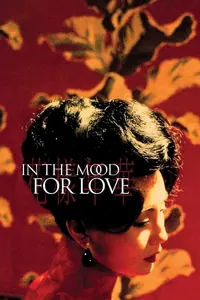
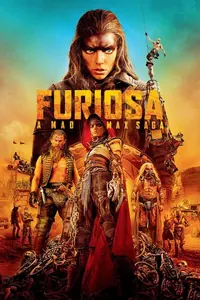
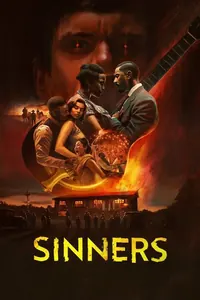
Three films, three ways of lighting: Christopher Doyle’s saturated practicals, Greig Fraser’s hard desert light, Dean Cundey’s cold anamorphic interiors.
Questions people ask next
What is cinematography reference?
Cinematography reference is a set of frames you use to show or study a look: how a scene is lit, framed, lensed and coloured. Directors and DPs use it to agree on a look before a shoot, in a lookbook, a pitch deck or a shot list, and students use it to study how a shot was built.
Where do cinematographers get reference images?
Mostly from frames of finished films, pulled from a stills library such as FrameThrower, ShotDeck or FilmGrab, or grabbed from a Blu-ray. They add behind-the-scenes material from American Cinematographer and YouTube breakdowns when they need to know how a shot was lit, not just how it looks.
Is there a free cinematography reference site?
Yes. FilmGrab is free to browse by film. FrameThrower is free with an account: 10 searches a day across every frame and 5 downloads a week, so you can search by lighting or shot size rather than scroll film by film.
How do I find a specific kind of shot?
Describe it in plain words, such as "single source side light on a face at night" or "low angle wide shot in the rain", and search for it. FrameThrower matches the description against every frame, and you can narrow by shot size, lighting, lens, colour or decade, or search with a reference image of your own.
Can I use film stills in a lookbook or pitch deck?
Film stills are copyrighted. Using a handful as internal reference, in a lookbook, a pitch deck or a shot list that is not published, is how the industry has always worked, but publishing them is a different matter. Our intended-use page explains how the frames here are meant to be used.