Best Jidaigeki Movies
Ranked by how strongly each film carries the visual signature of jidaigeki cinema — measured across 1,351 indexed frames from 23 films, against a 404,689-frame catalogue baseline. Not by box office, and not by vote.
Jidaigeki films over-index on samurai, hakama and topknot — the objects that make the genre recognisable before a line is spoken.
- 1
Sanjuro (1962)
Akira KurosawaDP Fukuzo KoizumiIMDb 8.0TMDB 8.0See in full on FrameThrower →
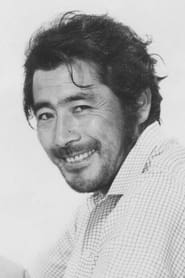 Toshirō Mifuneas Sanjûrô Tsubaki / The ronin
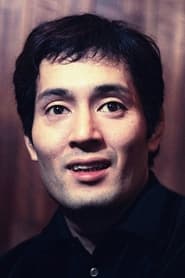 Tatsuya Nakadaias Hanbei Muroto
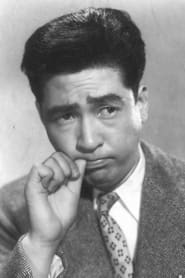 Keiju Kobayashias The Spy
A wandering samurai, Sanjuro, is drawn into local politics. The Superintendent of a clan is plotting to take over the clan by implicating the Chamberlain in corrupt activities (activities the Superintendent is actually responsible for). Part of the plan involves killing off the Chamberlain's staff and, in protecting them, Sanjuro sides with them. The supporters are massively outnumbered so it will require all of Sanjuro's cunning and swordcraft to ensure the Superintendent does not succeed in his evil plan.
- 2
Harakiri (1962)
Masaki KobayashiDP Yoshio MiyajimaIMDb 8.6TMDB 8.4See in full on FrameThrower →
Down-on-his-luck veteran Tsugumo Hanshirō enters the courtyard of the prosperous House of Iyi. Unemployed, and with no family, he hopes to find a place to commit seppuku—and a worthy second to deliver the coup de grâce in his suicide ritual. The senior counselor for the Iyi clan questions the ronin’s resolve and integrity, suspecting Hanshirō of seeking charity rather than an honorable end. What follows is a pair of interlocking stories which lay bare the difference between honor and respect, and promises to examine the legendary foundations of the Samurai code.
- 3
Yojimbo (1961)
Akira KurosawaDP Kazuo MiyagawaIMDb 8.2TMDB 8.1See in full on FrameThrower →
- Toshirō Mifuneas Sanjuro Kuwabatake / The Samurai
- Tatsuya Nakadaias Unosuke, gunfighter
 Yōko Tsukasaas Nui
Sanjuro, a wandering samurai enters a rural town in nineteenth century Japan. After learning from the innkeeper that the town is divided between two gangsters, he plays one side off against the other. His efforts are complicated by the arrival of the wily Unosuke, the son of one of the gangsters, who owns a revolver. Unosuke has Sanjuro beaten after he reunites an abducted woman with her husband and son, then massacres his father's opponents. During the slaughter, the samurai escapes with the help of the innkeeper; but while recuperating at a nearby temple, he learns of innkeeper's abduction by Unosuke, and returns to the town to confront him.
- 4
Throne of Blood (1957)
Akira KurosawaDP Asakazu NakaiIMDb 8.0TMDB 7.9See in full on FrameThrower →
- Toshirō Mifuneas Taketoki Washizu
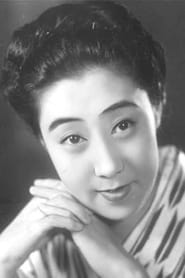 Isuzu Yamadaas Lady Asaji Washizu
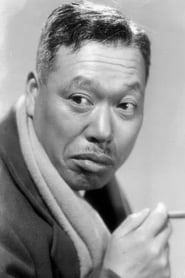 Takashi Shimuraas Noriyasu Odagura
After securing a major victory on the battlefield, Taketoti Washizu and one of his commanders, Yoshiaki Miki, find themselves lost in the maze-like Spider's Web forest. They come across a spirit-like seer who tells them of their future: both have been promoted because of their victory that day; Washizu will someday be the Great Lord of the Spider's Web castle while Miki's son will someday rule as Great Lord as well. When they arrive at the castle, they learn that the first part of the prophecy is correct. Washizu has no desire to become Great Lord but his ambitious wife urges him to reconsider. When the current Great Lord makes a surprise visit to his garrison outpost, Washizu is again promoted to commander of his vanguard but his wife reminds him of the danger that comes with the position. As pressure mounts, Wahizu takes action leading to its inevitable conclusion.
- 5
Kagemusha (1980)
Akira KurosawaDP Shoji UedaIMDb 7.9TMDB 7.8See in full on FrameThrower →
- Tatsuya Nakadaias Shingen Takeda / Kagemusha
 Tsutomu Yamazakias Nobukado Takeda
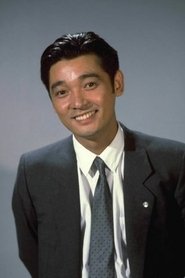 Kenichi Hagiwaraas Katsuyori Takeda
Akira Kurosawa's lauded feudal epic presents the tale of a petty thief who is recruited to impersonate Shingen, an aging warlord, in order to avoid attacks by competing clans. When Shingen dies, his generals reluctantly agree to have the impostor take over as the powerful ruler. He soon begins to appreciate life as Shingen, but his commitment to the role is tested when he must lead his troops into battle against the forces of a rival warlord.
- 6
Seven Samurai (1954)
Akira KurosawaDP Asakazu NakaiIMDb 8.6TMDB 8.5See in full on FrameThrower →
A veteran samurai, who has fallen on hard times, answers a village's request for protection from bandits. He gathers 6 other samurai to help him, and they teach the townspeople how to defend themselves, and they supply the samurai with three small meals a day. The film culminates in a giant battle when 40 bandits attack the village.
- 7
Ran (1985)
Akira KurosawaDP Takao SaitōIMDb 8.2TMDB 8.0See in full on FrameThrower →
- Tatsuya Nakadaias Lord Hidetora Ichimonji
 Akira Teraoas Taro Takatora Ichimonji
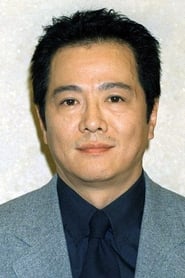 Jinpachi Nezuas Jiro Masatora Ichimonji
Japanese warlord Hidetori Ichimonji decides the time has come to retire and divide his fiefdom among his three sons. His eldest and middle sons - Taro and Jiro - agree with his decision and promise to support him for his remaining days. The youngest son Saburo disagrees with all of them arguing that there is little likelihood the three brothers will remain united. Insulted by his son's brashness, the warlord banishes Saburo. As the warlord begins his retirement, he quickly realizes that his two eldest sons selfish and have no intention of keeping their promises. It leads to war and only banished Saburo can possibly save him.
- 8
The Hidden Fortress (1958)
Akira KurosawaDP Kazuo YamasakiIMDb 8.0TMDB 8.0See in full on FrameThrower →
The story follows two greedy peasants in feudal Japan, Tahei and Matashichi, who are returning home from a failed attempt to profit from a war between neighboring clans. En Route they encounter the remnants of the defeated tribe that consists, most notably, of a famous General and a Princess who are hiding out in a fortress in the mountains. General Rokurota Makabe and Princess Yuki need to escape into allied territory with their large supply of gold so that they can rebuild their shattered clan. To do this the Peasants are tricked into helping them, with the promise that they will receive a large share of the gold when the destination is reached. Along the way, the General's prowess is put to the test as he must guide the 4, and later 5 with the inclusion of a freed slave, through close encounters with the pursuing enemy, and out of difficult situations the bumbling peasants manage to get them into.





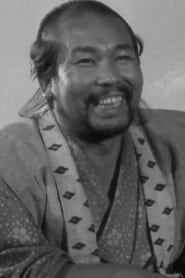


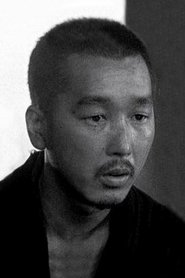
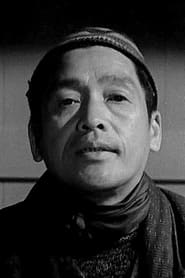
What jidaigeki films are made of
How much more often each element appears in a jidaigeki frame than in an average frame from the catalogue. A ratio, not a share — samurai is not in most frames, it is simply far more common here than anywhere else.
- samurai228.0×
- hakama200.7×
- topknot145.4×
- katana130.2×
- kimono129.3×
- samurai armor111.4×
- tatami mat71.5×
- shoji screen64.3×
How jidaigeki films are shot
Weaker signals than the objects above, and worth saying so: most dramatic genres skew dark and night-heavy, so these numbers separate jidaigeki from the catalogue far more than they separate it from its neighbours.
- 13%chiaroscurovs 2% baseline
- 34%widevs 20% baseline
- 11%fullbodyvs 7% baseline
- 27%low keyvs 39% baseline
- 34%mediumvs 48% baseline
What breaks the pattern
Rashomon (1950) is the least typical film here — it carries the least of what the rest of this list is made of. Which is either a failure of the genre label, or the most interesting film on the page.
Method
Every frame in the FrameThrower catalogue is tagged for shot size, lighting, time of day, camera angle, colour and the objects visible in it. This page aggregates those tags across 1,351 frames from 23 films carrying the jidaigeki label, and compares each figure to the same measurement across the whole catalogue (404,689 frames). Films are ranked by how closely they match the theme’s over-indexed elements, weighted by how distinctive each element is; one film per series. Only films with at least 20 indexed frames and 500 TMDB votes are listed.
Machine-readable: /api/list/jidaigeki
What is FrameThrower?
Great films start with great references.
The numbers on this page come from the same index you can search directly. Every frame is tagged for lighting, lens, shot size, colour and mood — so you can find the reference you already have in your head, by describing it, by dropping in an image, or by picking a colour.
- The largest film library in the world — searchable frame by frame
- Search by light, colour, lens or mood — or by dropping in an image
- Script to lookbook in an afternoon — a board for every scene, from real frames
- Moodboards you can share on one link — your DP, designer and client see the same film
- API and MCP access — for agentic and developer workflows
- Free to start — no card required
A pitch trailer takes weeks of work and a budget most projects never get. The lookbook gets you there in an afternoon.
DiscoveryResearchReferencesEducation
These are real movie frames, shown at reduced resolution. All rights remain with their respective owners; they appear here for study, commentary and education under fair-use principles. How these are meant to be used